
Shop the collection
John James Beading Needles
John James beading needles from England: long beading needles in sizes 10 to 15, short sharps in 10 to 12, and bead/loom needles.
English beading needles are long, thin and flexible, and they curve with use, so keep spares. Choose by the smallest bead and the number of passes: 10 or 12 for 8/0 and 11/0, 12 or 13 for 15/0, and 15 for very fine beads.


Best sellers

Hot Items
View all-

-

-

-

3BB412-L
Preciosa Ornela Bugle Silver Line Crystal #3 Loose
Quantity: 50g
Low stock (9 units)$458Unit price -
-
-
Sold out
-





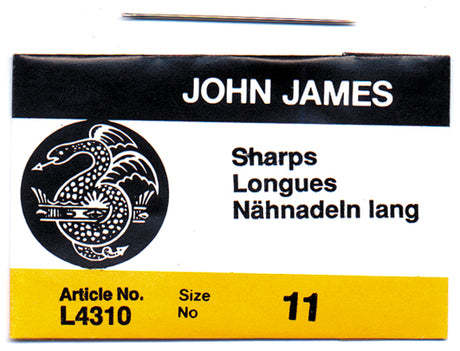
John James Beading Needles
Good to know
- Higher needle number, finer needle: size 10 is easiest for beginners, 12 is the all-round beadweaving size.
- Use size 13 for 15/0 beads and many passes, and size 15 for very fine antique beads.
- "Sharps" are short needles for control; long needles pick up many beads at once for loom rows.
- English needles like John James are long, thin and flexible, and they curve with use.
- For 8/0 and 11/0 seed beads, a size 10 or 12 needle works well.
Questions & answers
How do beading needle sizes work?
Like seed beads, a higher needle number means a finer needle: size 10 is the easiest for beginners, 12 is the all-around beadweaving size, and 13 or 15 handle 15/0s and very fine beads. Choose by the smallest bead in your design and how many times your thread will pass through it.
What size beading needle should I use for my seed beads?
For 8/0 and 11/0 seed beads, a size 10 or 12 needle works well; for 15/0 and smaller, use a 12 or 13; very fine antique beads may need a 15. If your pattern makes many passes through the same beads, go one needle size finer.
Why do my John James needles bend?
English beading needles like John James are long, thin and flexible, and they curve with use. That's normal, so keep spares on hand.
What's the difference between sharps and long beading needles?
In beading needles, "sharp" means short, not pointier. Short sharps give more control and break less often, while long needles pick up many beads at once, which suits loom rows.
Ages 16+. Not intended for use by children. Contains small parts that can be a choking hazard.