
Shop the collection
Cords
Stringing cord for necklaces, bracelets and knotting: waxed cord, nylon cord, Griffin silk with an attached needle, bolo cord and lacing cord.
Choose cord that fills the bead hole. Silk and nylon knotting cord is finished with knots, bead tips or French wire, never crimps. Round cord takes coil ends, fold-over ends or glue-in end caps sized to its diameter, or a sliding knot with no clasp at all.


Best sellers
 Sold out40% off
 Sold out40% off
-
40% off
-
40% off
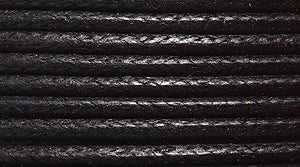
5CH109-25
Waxed Cord Black .5mm 25MTR Spool
Quantity: 25 Meters
Low stock (7 units)$272$454Unit price  40% off
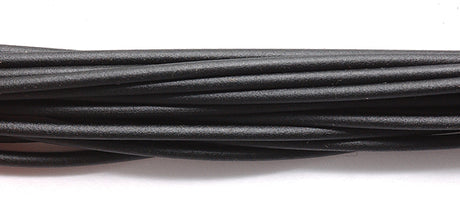
5CH109-00
India Waxed Cord Black .5-.7mm 100MTR Spool
Quantity: 100 Meters
Very low stock (2 units)$559$932Unit price 40% off
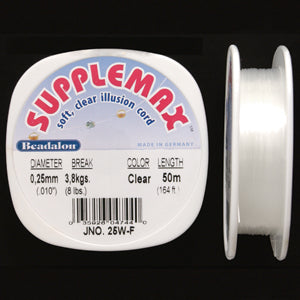
25FI293-50
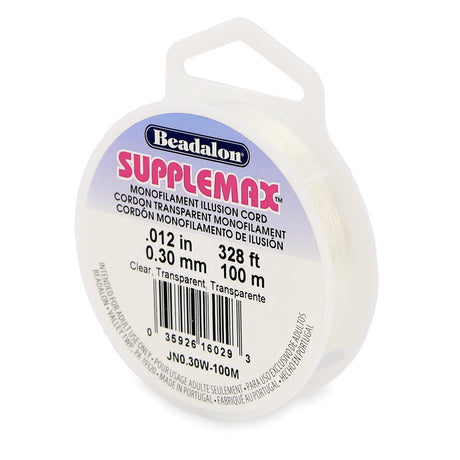
Supplemax Nylon Cord .25mm 50MTR Spool
Quantity: 50 Meters
Very low stock (2 units)$209$349Unit price
![25FI293-100: Supplemax Nylon Cord .25mm 100MTR SP]()
 40% off
25FI293-100
Supplemax Nylon Cord .25mm 100MTR Spool
Quantity: 100 Meters
Very low stock (1 unit)$269$449Unit price-
Sold out40% off
-
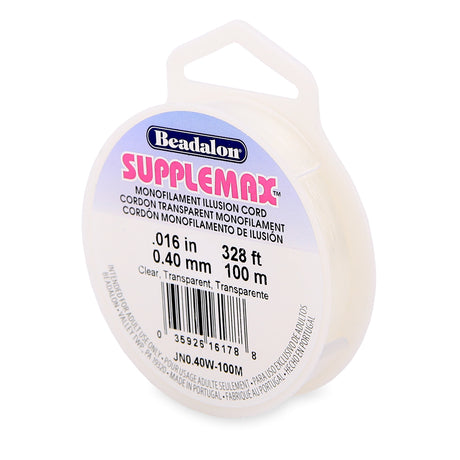
![40FI293-100: Supplemax Nylon Cord .40mm 100MTR SP]() Sold out40% off
-
Sold out40% off
-
40% off
2CH112-GS
Griffin Silk Cord White 2 Meter With Needle #2 - Card
Quantity: 2 Meters
Very low stock (1 unit)$297$495Unit price  40% off
-
40% off
-
Sold out40% off
4CH112-GS
Griffin Silk Cord White 2 Meter With Needle #4 - Card
Quantity: 2 Meters
$297$495Unit price -
40% off
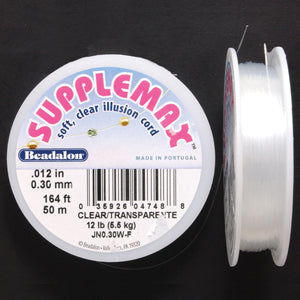
30FI293-50
Supplemax Nylon Cord .30mm 50 Meter - Spool
Quantity: 50 Meters
Low stock (3 units)$209$349Unit price -
40% off
-
![30FI293-100: Supplemax Nylon Cord .30mm 100MTR SP]() Sold out40% off
-
40% off
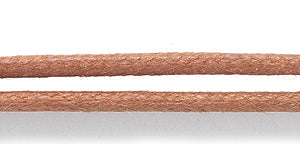
5CH109-50
India Waxed Cord Black .5-.7mm 50MTR Spool
Quantity: 50 Meters
Low stock (5 units)$272$454Unit price -
Sold out40% off
 40% off
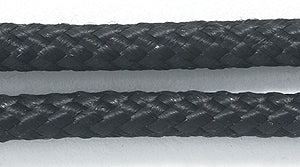
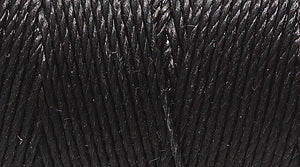
41CH109-B
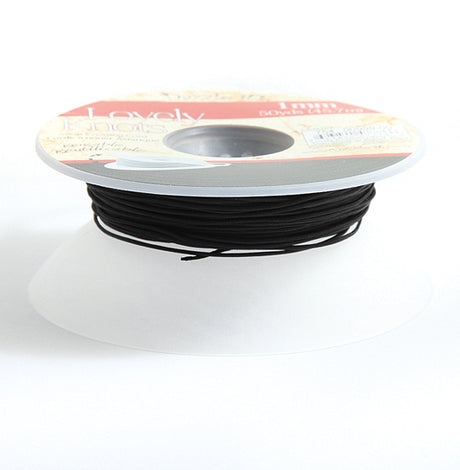
Lovely Knots Cord 1mm Jet Black 50YD Spool
Quantity: 50 Yards
Low stock (3 units)$597$995Unit price-
40% off
-
Sold out40% off
-
Sold out40% off








Hot Items
View all-
40% off
-
 40% off
-
40% off
-
40% off
-
 40% off
-
 40% off
-
 80% off
-
![FI281-11A: Pony Beading Needle #11 25 Piece Package]() Sold out40% off





Cords
Good to know
- Griffin silk comes on 2 m cards with the needle attached, sized #2 (0.45 mm) to #16 (1.15 mm).
- Choose a cord that fills the bead hole.
- Never crimp silk or nylon cord: finish it with bead tips or French wire.
- Seal only the end knots with G-S Hypo Cement; glue on every knot stiffens the drape.
- A sliding knot closure works on cord 1 mm and up.
- Re-wax waxed cord periodically to keep it working well.
Questions & answers
How do I finish a silk or knotted necklace?
Don't use crimps on silk or nylon cord, since their edges cut thread. Finish with a bead tip (clamshell) over a sealed knot, or with French wire at the clasp, and seal only the end knots with G-S Hypo Cement.
Which Griffin silk size should I use?
Choose the size that fills your bead holes. Griffin runs from #2 (0.45 mm) for very small holes to #16 (1.15 mm), with #6 (0.70 mm) and #8 (0.80 mm) common for pearls and gemstones. Each 2 m card comes with a needle attached.
Can I make a cord necklace without a clasp?
Yes, with a sliding knot closure, which works on cord 1 mm and up. Cut the cord about twice the finished length, and glue only the trimmed tails, never the sliding knots.
How do I glue cord into an end cap?
Pick a cap whose inside diameter closely matches the cord, since a gap lets the joint flex and fail. Wipe the cord end with isopropyl alcohol, glue, push it fully in, and let the glue cure completely; E6000 takes 24 to 72 hours.